- All
- Product Name
- Product Keyword
- Product Model
- Product Summary
- Product Description
- Multi Field Search

Views: 0 Author: Site Editor Publish Time: 2026-06-20 Origin: Site
High-speed networks rely entirely on flawless physical connections to function. Even a fraction of a decibel of signal loss can cascade into massive data bottlenecks. We see this frequently during 5G, FTTx, and high-density data center rollouts. Optical budgets leave no room for error.
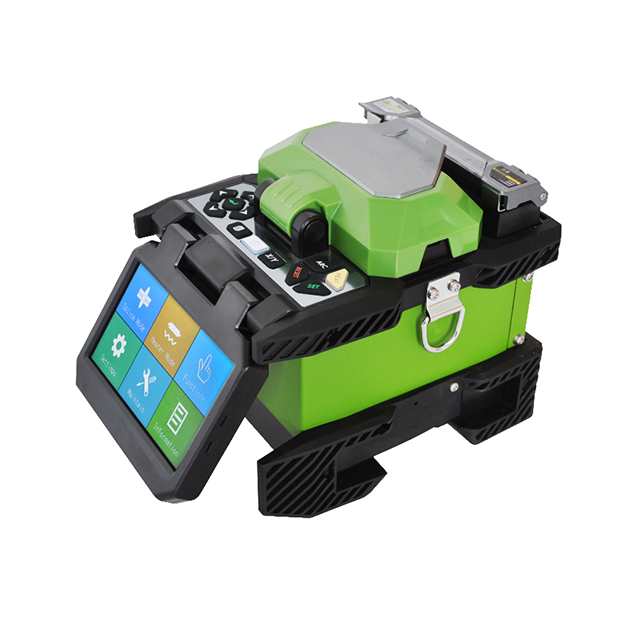
Microscopic alignment errors quickly lead to macro-level operational failures. Increased signal attenuation triggers costly truck rolls. You face persistent maintenance headaches and delayed project sign-offs. Procurement and engineering teams must avoid substandard network connections at all costs. An advanced Fiber Fusion Splicer serves as your primary defense against network degradation.
We will move beyond basic definitions to provide an evaluation-focused framework. You will learn how to select the right equipment. We base this on environmental realities, verifiable performance metrics, and operational efficiency. By prioritizing the correct alignment technology, you protect your entire optical infrastructure from day one.
Performance Baseline: A high-quality fiber fusion splicer ensures an average splice loss of less than 0.02 dB for single-mode fibers, vastly outperforming mechanical alternatives.
Technology Selection: Core alignment is non-negotiable for long-haul networks, while cladding alignment offers a cost-effective alternative for shorter FTTx drops.
Operational Factors: Upfront CAPEX is secondary to operational variables like electrode lifespan, automated environmental calibration, and cycle speeds.
Implementation Risk: Splicer performance is heavily gated by cleaver quality and operator preparation standards.
You must frame your choice of connection method around long-term network reliability rather than upfront installation speed. Many field teams feel tempted to use mechanical splicing for quick repairs. Mechanical methods use index-matching gel to bridge the gap between two cleaved fibers. This approach seems fast initially. However, the gel degrades over time. It dries out, attracts microscopic dust, and creates severe reflections. You end up sacrificing long-term stability for a minor reduction in immediate labor.
Fusion splicing creates a permanent, continuous glass weld. The plasma arc melts the silica cores together. This eliminates the air gap entirely. We can verify this performance difference through concrete attenuation and reflectance data.
Performance Summary Chart: Fusion vs. Mechanical Splicing | |||
Performance Metric | Fusion Splicing | Mechanical Splicing | Network Impact |
|---|---|---|---|
Insertion Loss | < 0.02 dB | 0.20 dB - 0.50 dB | Fusion preserves the optical budget for longer distances. |
Return Loss (Reflectance) | < -60 dB | ~ -40 dB | Fusion prevents signal echo, which is critical for high-speed video and data. |
Connection Lifespan | 20+ Years | 5 - 10 Years | Gel degradation in mechanical splices forces future replacements. |
You must balance the initial capital expenditure (CAPEX) against your long-term operational expenses (OPEX). A fusion machine requires a higher initial investment. It also requires trained operators. However, you dramatically reduce maintenance burdens over a 10-to-20-year network lifespan. Fault isolation on a degraded mechanical splice takes hours of labor. Sending a technician in a truck to replace a dried-out mechanical connector eliminates any savings you achieved during the initial installation. A permanent glass weld prevents these exact scenarios.
Core alignment represents the highest standard of optical precision. These devices utilize a complex mechanism of multi-directional cameras and multiple micro-stepping motors. They look past the outer glass jacket. The internal cameras identify the actual light-carrying silica core. The motors then physically adjust the fibers on the X, Y, and Z axes. They align the cores perfectly, regardless of any cladding concentricity errors.
You must deploy core alignment technology for long-haul networks, backbone rings, and high-speed O-band or C-band transmission. In these environments, minimizing optical loss is non-negotiable. Even a 0.05 dB error compounds over hundreds of kilometers. Core alignment ensures your signal reaches the distant receiver without requiring additional costly optical amplification.
Best Practice: Always mandate core alignment for any network link exceeding 20 kilometers.
Common Mistake: Attempting to splice disparate fiber brands without core alignment. Different manufacturers often have slight variations in core centering.
Cladding alignment utilizes a simpler mechanism. These devices align the fibers based entirely on their outer diameter. Traditional fixed V-groove machines rely on the physical groove to hold the fibers straight. Active cladding alignment adds basic motor movement to adjust the outer jackets slightly. However, neither method actually verifies where the inner light-carrying core sits. They simply assume the core is perfectly centered inside the cladding.
You can position cladding alignment as a highly viable, budget-conscious choice for specific applications. They work exceptionally well for short-haul enterprise LANs. They dominate the final mile of FTTx deployments. In these shorter runs, loss budgets have slightly more tolerance. A 0.04 dB loss on a 500-meter drop cable will not break the network. They offer faster cycle times and reduce equipment weight for technicians working on ladders or in tight residential spaces.
Time dictates operational efficiency. You must evaluate the exact time-to-splice and time-to-shrink-tube. Modern devices can complete a standard weld in under 7 seconds. The subsequent heating cycle for the protective sleeve takes roughly 15 seconds. This speed carries massive operational impacts. In large-scale deployments, shaving 10 seconds off every single cycle translates to hours of saved labor per technician every week. You drastically reduce payroll expenditure on massive fiber-to-the-home rollouts. When evaluating specifications, you must combine both times to understand the true cycle duration.
Field realities destroy fragile lab equipment. You must strictly assess Ingress Protection (IP) ratings for dust, shock, and moisture resistance. Outside plant (OSP) technicians work in blowing dirt, freezing rain, and high-vibration environments. An IP52 rating ensures the machine survives typical outdoor exposure. Drop tests verify the internal mirrors and motors will survive a tumble from a splicing table.
Beyond physical armor, you must prioritize automated environmental compensation. The plasma arc is highly sensitive. Atmospheric pressure, ambient temperature, and humidity directly alter how hot the arc burns. Internal sensors read the environment and automatically adjust the arc power. Without this feature, a machine calibrated at sea level will chronically under-heat the glass on a mountain top. This leads to weak, brittle welds that break during handling.
Battery scalability defines a technician's daily output. You must evaluate battery capacity strictly by "cycles per charge" rather than mere amp-hours. A cycle includes both the electric arc and the heating element. The heating element consumes the vast majority of the battery power. A dependable Fiber Fusion Splicer must provide enough cycles to cover a full 10-hour technician shift. We recommend a baseline capacity of 250 to 300 cycles per charge. Field portability also requires modular battery designs. Technicians should easily swap a depleted battery for a fresh one without powering down the device for extended periods.
We must state a transparent assumption up front. Even the most advanced six-motor alignment system cannot fix a bad cleave. The glass end-face dictates the success of the entire operation. Procurement teams often make the critical mistake of buying high-end alignment machines while skimping on the preparation tools.
You must budget for precision optical cleavers. A proper cleaver scores the glass microscopically and fractures it perfectly straight. You need end-face angles consistently under 0.5 degrees. If the cleaver leaves a lip, hackle, or severe angle, the machine will reject the fiber. If you force the machine to weld it anyway, you create massive internal reflection. Treat the cleaver as an equal partner to the splicing machine.
Follow these daily preparation steps to ensure success:
Strip the protective coating using properly calibrated thermal or mechanical strippers.
Clean the bare silica thoroughly using high-purity isopropyl alcohol and lint-free wipes.
Cleave the fiber precisely, ensuring the blade drops cleanly without bouncing.
Load the prepared fiber into the V-grooves immediately to prevent microscopic dust accumulation.
Alignment systems consume parts rapidly. You must manage electrode lifespan proactively. Tungsten electrodes typically last between 3,000 and 5,000 arcs. As they age, the metal degrades. Silica off-gassing coats the electrode tips. This degradation causes the plasma arc to sputter and jump. An unstable arc unevenly melts the glass. If you ignore preventative maintenance schedules, you will deploy brittle joints that fail during winter temperature contractions.
Software and calibration require equal attention. Manufacturers constantly release firmware updates to refine motor algorithms and update heating profiles for new cable types. You must keep the software current. Furthermore, operators must perform daily arc calibration. They must strike test arcs every morning before beginning production. This matches the device baseline to the current atmospheric weather conditions.
Selecting the right hardware goes beyond reading specification sheets. You must enforce strict vendor requirements. Prioritize manufacturers that offer rapid localized service centers. If a unit requires factory calibration, shipping it overseas cripples your deployment timeline. You should also demand explicit loaner programs. A robust loaner program prevents deployment bottlenecks during unexpected repairs. Strong warranty coverage proves the manufacturer trusts their own durability claims.
You should apply application-specific shortlisting to narrow your choices:
For Data Centers and Ribbon Cables: Look specifically for mass fusion splicers. These devices connect up to 12 fibers simultaneously. You must ensure they feature rapid, dual-heating elements to keep pace with the massive fiber counts found in modern server halls.
For Outside Plant (OSP): Prioritize ruggedization over sheer speed. Demand core-alignment capabilities. Ensure the battery capacity supports remote operation where generators are unavailable.
For FTTx Drop Cabling: Focus on weight reduction. Cladding alignment devices offer the portability needed for aerial bucket trucks and residential basements.
Your most actionable next step involves physical testing. Advise your stakeholders to request live, field-condition demonstrations. Never rely solely on optimal-condition specification sheets published in marketing brochures. Take the demo unit into the cold. Expose it to wind. Test it using your specific brand of drop cable. Real-world conditions quickly reveal the true capability of the hardware.
An alignment machine is far more than a simple hand tool. It stands as the primary safeguard for your entire network optical budget and long-term profitability. Microscopic glass welds form the literal foundation of modern high-speed communications.
Evaluating these devices requires looking far beyond the initial capital layout. You must assess environmental adaptability, the long-term cost of consumables, and the localized vendor support ecosystem. A cheap device paired with a poor cleaver will cost you heavily in repetitive maintenance roll-outs.
We encourage you to map your typical installation distances. Match your required attenuation budgets to either core or cladding technologies. Consult with technical engineering teams, request a comparative specification matrix, and demand a customized equipment evaluation in your actual working environment.
A: The industry standard typically requires an insertion loss of ≤ 0.02 dB for single-mode fiber. However, consistency across multiple splices proves much more critical than achieving a single perfect connection. You must maintain this strict baseline across the entire route to protect the overall attenuation budget.
A: You should replace electrodes every 3,000 to 5,000 arc cycles. Symptoms of dangerous degradation include inconsistent loss readings, visible arc sputtering, and an inability to calibrate successfully. Ignoring these signs compromises joint strength and clarity.
A: No. Cladding alignment aligns the outer diameter of the fiber. It cannot compensate for internal core concentricity errors. Over long-haul routes, these microscopic misalignments compound rapidly. They will quickly exceed the strict loss budgets required for long-distance optical transmission.
A: Atmospheric changes alter the plasma intensity. Variations in daily humidity, ambient temperature, and barometric pressure dictate how the arc melts the silica. Performing a daily calibration normalizes the equipment. This routine prevents operators from under-heating or over-melting the delicate glass.