Views: 0 Author: Site Editor Publish Time: 2026-06-10 Origin: Site
The transition from legacy copper lines to unified FTTH (Fiber to the Home) architectures makes hybrid data-and-video delivery a baseline requirement. It is simply no longer a luxury for modern network operators. Today, ISPs and network integrators face a significant technical challenge. They must deliver gigabit high-speed internet and traditional cable TV channels over a single fiber strand. Doing this without increasing deployment complexity or initial capital expenditures requires careful strategic planning. This guide moves beyond basic GPON definitions. We aim to provide a pragmatic, decision-stage framework. You will learn how to accurately evaluate, strategically shortlist, and successfully deploy hardware in demanding residential environments. Understanding these technical factors ensures your network remains robust. It also keeps your subscribers highly satisfied as daily bandwidth demands continue to grow.
Converging RF video and IP data through a single CATV ONU significantly reduces hardware footprint and maintenance overhead.
Choosing between standard bridging/routing ONUs and specialized form factors (like GPON/XGS-PON ONU sticks) depends directly on legacy infrastructure compatibility.
Thorough evaluation must weigh RF output stability, interoperability with emerging smart home protocols, and long-term OPEX over initial hardware costs.
Vendor selection should prioritize firmware support, supply chain transparency, and verifiable SLA agreements.
Network operators need highly specific metrics to gauge integration effectively. They must define what successful deployment looks like before purchasing hardware. Reducing truck rolls stands out as a primary operational goal. Dispatching field technicians costs significant money and wastes valuable time. Equipment consolidation inherently reduces these expensive physical visits. Lowered subscriber churn also marks a successful network rollout. Users demand flawless performance across all digital screens. When streams buffer, customers leave for competing providers. Streamlined provisioning helps achieve these vital retention goals. Plug-and-play installation minimizes service activation delays. You want technicians finishing installs quickly. Fast installs improve daily operational margins.
Integrating RF over Glass (RFoG) and gigabit broadband into one unified terminal offers massive advantages. We merge video and data streams efficiently at the optical edge. This unified architecture dramatically lowers operational expenses over time. It shrinks the physical equipment footprint inside residential properties. Deploying a versatile CATV ONU eliminates legacy standalone modems. Users no longer need bulky separate television decoders. You save substantially on household power consumption. You also reduce long-term maintenance complexities significantly. A single remote management interface handles both internet routing and video troubleshooting seamlessly.
Modern network scalability must handle intense contemporary bandwidth demands. Residential internet connections no longer manage just simple web browsing. High-capacity digital environments represent the new operational normal. Families routinely stream 4K and 8K video concurrently. Smart home ecosystems generate continuous heavy IoT traffic loads. Dozens of smart bulbs, security cameras, and sensors require highly stable connections. Operators must deploy hardware capable of handling this massive localized concurrency. Future-proofing the distribution network prevents costly premature equipment upgrades. Hardware limits dictate subscriber satisfaction levels directly.
Bridging versus routing modes dictate your core network architecture. Bridging mode units act purely as optical media converters. They handle optical-to-electrical and RF conversion exclusively. This mode suits operators utilizing separate home Wi-Fi gateways. It avoids frustrating double NAT issues for advanced power users. Power users often prefer installing proprietary third-party mesh router systems. Bridging ensures seamless IP passthrough without interference.
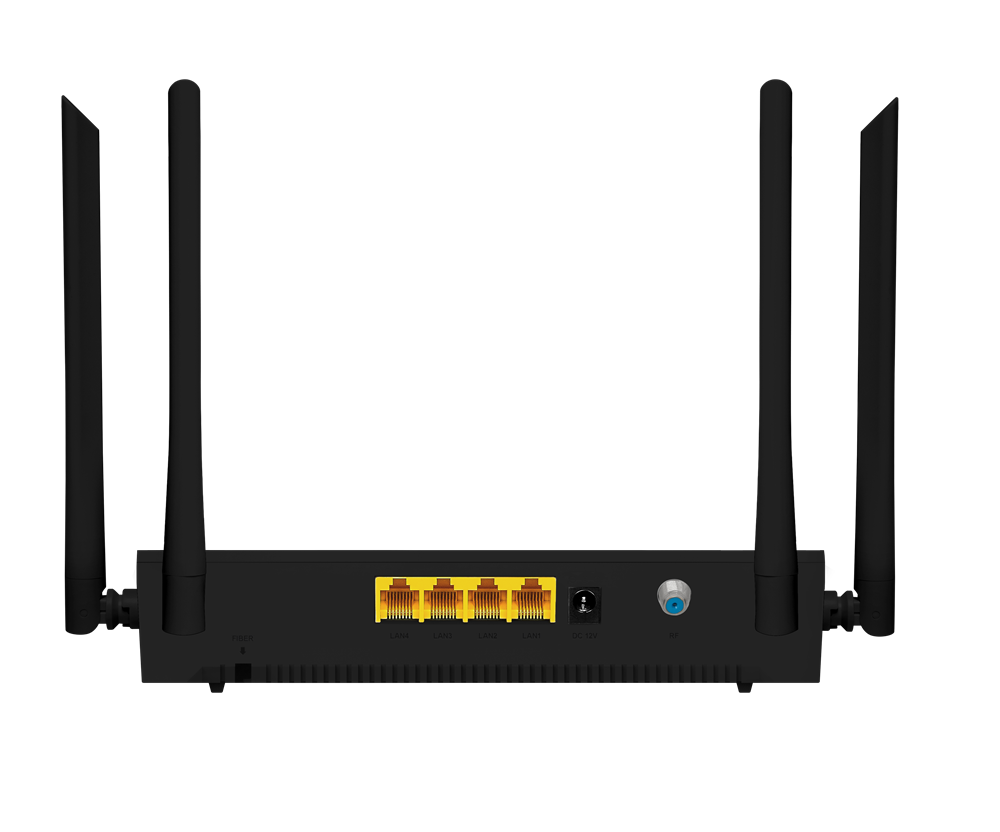
Routing mode units operate as complete intelligent residential gateways. These all-in-one devices feature built-in Wi-Fi 6 and internal DHCP capabilities. They deliver services directly to local consumer devices. Operators maintain complete administrative control over the local area network. This direct control simplifies remote troubleshooting procedures significantly. You can monitor wireless signal strength across the entire home remotely.
Form factor variations matter heavily for specific deployment scenarios. Standard desktop units remain the most common consumer choice. They offer robust thermal cooling profiles. They provide multiple physical gigabit Ethernet LAN ports. Emerging alternatives exist for highly specialized localized hardware upgrades. XGS-PON ONU sticks represent a fascinating technological evolution. You plug these miniature modules directly into compatible gateway hardware. They save valuable desk space inside cramped apartments. They eliminate extra power adapters completely. Choosing between desktop units and stick modules depends entirely on your existing routing infrastructure.
WDM integration makes true service convergence possible over single fibers. Triplexer technology forms the optical core of this hardware. It seamlessly splits incoming multiplexed optical signals by specific wavelengths. Understanding this exact spectral allocation is essential for network design.
Wavelength | Service Type | Directional Flow | Primary Function |
|---|---|---|---|
1310 nm | Upstream Data | Subscriber to OLT | Handles user uploads, IP requests, and IoT telemetry. |
1490 nm | Downstream Data | OLT to Subscriber | Delivers gigabit internet, streaming data, and VoIP. |
1550 nm | Downstream Video | Headend to Subscriber | Transmits analog and digital RF cable TV channels. |
RF interface parameters dictate residential video stability directly. Automatic Gain Control (AGC) serves as a vital hardware feature. It maintains consistent RF output levels despite upstream optical fluctuations. Minimum acceptable thresholds usually range optimally between 70 and 80 dBuV. High Carrier-to-Noise Ratio (CNR) prevents annoying visible visual artifacts. Strong Modulation Error Ratio (MER) ensures flawless digital video decoding. Artifact-free video keeps your legacy television subscribers happy. Poor RF metrics lead immediately to snowy analog pictures and macroblocking digital streams.
Optical performance must align tightly to established industry standards. You must validate strict protocol compatibility before purchasing hardware. Devices should meet GPON (ITU-T G.984) operational transmission parameters. They must also support EPON (IEEE 802.3ah) standards for dual-mode deployment networks. Assess receiver sensitivity limits rigorously during your evaluation. Poor optical sensitivity causes frequent data packet loss. It degrades the daily user experience instantly. Strong optical sensitivity ensures reliable data performance even at extreme optical split ratios.
Smart home ecosystem interoperability is increasingly vital today. The localized hardware acts as a seamless communications backbone. It supports complex cross-protocol ecosystems natively. Evaluate readiness for Matter-compliant smart home protocol bridges. The device must route local IoT traffic efficiently across subnets. Low latency matters heavily for smart home device responsiveness. When users press a smart light switch, execution must feel instantaneous. High-quality routing firmware handles thousands of tiny concurrent UDP packets seamlessly.
Security frameworks protect your entire PON distribution infrastructure. Assess native AES-128 encryption capabilities thoroughly. Encryption prevents malicious local actors from intercepting downstream neighborhood traffic. Rogue ONU detection capabilities are equally critical. A rogue unit transmits light entirely out of turn. This continuous transmission jams the shared upstream TDMA window. Automatic rogue detection isolates faulty hardware instantly. This isolation protects the wider neighborhood loop from dropping offline. Compliance regarding local telecommunications regulatory standards is always mandatory.
Brownfield versus greenfield architectural challenges require drastically different deployment strategies. Rolling out pure-fiber greenfield builds is conceptually straightforward. You design the entire optical budget from scratch. Integrating modern hardware into existing legacy RF systems introduces massive hurdles. Brownfield sites often feature aging coaxial home wiring networks. You must balance optical power budgets against legacy amplifier noise floors. Old splitters inside the home degrade modern RF signals rapidly. Technicians must frequently replace legacy indoor splitters to ensure optimal performance.
Thermal and environmental operational considerations directly impact hardware lifespan. Real-world residential conditions punish sensitive networking electronics. Non-climate-controlled residential distribution boxes get incredibly hot during summer. Intense summer heat degrades optical transceivers rapidly over time. We recommend auditing thermal tolerance thresholds strictly before mass deployment. Adequate physical ventilation remains absolutely essential. Placing units inside cramped, sealed media enclosures often causes premature thermal throttling.
Firmware integration and provisioning bottlenecks often delay major network rollouts. Vendor lock-in presents a serious operational and financial risk. Proprietary Optical Line Terminals (OLTs) frequently restrict third-party hardware compatibility intentionally. OMCI (ONT Management and Control Interface) integration hurdles are notoriously common. Custom OMCI MIBs often require manual firmware software adjustments. Always demand transparent interoperability documentation from your selected vendors. Testing compatibility in a controlled lab prevents catastrophic field deployment failures.
Robust troubleshooting protocols empower your remote support staff. Tier-1 support teams require essential remote diagnostic software features. Remote optical power monitoring saves countless support hours weekly. Technicians can verify light levels without leaving the call center. RF port toggling allows support agents to reboot video services remotely. These digital tools drastically cut expensive physical maintenance visits. They empower helpdesk agents to resolve complex issues during the very first call.
Creating a detailed vendor scorecard objectifies the entire purchasing process. Weight specific operational criteria carefully. Prioritize exhaustive software interoperability testing results above basic aesthetics. Supply chain reliability ensures you receive essential hardware precisely on schedule. Mean time between failures (MTBF) indicates long-term hardware durability accurately. Use the following framework to rate prospective manufacturing partners systematically.
Interoperability Verification: Does the vendor provide certified test reports against major OLT brands?
Supply Chain Transparency: Can they guarantee lead times during global component shortages?
Hardware Reliability (MTBF): Are thermal dissipation metrics proven via third-party lab testing?
Firmware Agility: How quickly do they release patches for identified security vulnerabilities?
Warranty SLA: Do they offer advanced replacement programs for defective units?
Proof of Concept (PoC) requirements validate bold vendor marketing claims. You must run key stress tests during the active trial phase. Stress test the internal routing hardware using maximum connected wireless clients. Monitor internal RF signal degradation carefully under severe temperature variance. Check data throughput performance during heavy dual-stack IPv4/IPv6 simulated loads. Only deploy units passing every strict benchmark parameter successfully.
Strategic next-step actions move the procurement process forward confidently. Transition away from reviewing basic glossy specification sheets. Request highly detailed technical engineering documentation instead. Ask for comprehensive firmware release update logs. Initiate small-scale targeted pilot deployments quickly. Field testing always reveals odd network issues hidden during controlled lab testing. A trusted CATV ONU vendor will support these pilot rollouts actively.
These optical convergence points dictate the ultimate end-user digital experience. Treating them merely as cheap, commoditized hardware risks systemic network instability. Investing in proven quality ensures long-term operational peace and reduces subscriber churn.
You must clearly match hardware capabilities to your overarching business goals. Align the specific physical form factor to your unique home architecture. Ensure RF capabilities match your ISP’s long-term network expansion plan perfectly.
Technical buyers should take immediate concrete next steps today. Download comprehensive specification matrices to compare raw hardware statistics. Request detailed interoperability whitepapers from prospective manufacturing partners. Schedule a rigorous PoC trial alongside your core engineering teams to validate real-world performance.
A: The standard Automatic Gain Control (AGC) range typically falls between 70 and 80 dBuV. Maintaining this specific output level is critical. It ensures stable analog and digital residential video quality. Dropping below this threshold introduces visual artifacts, pixelation, and snowy pictures on legacy television sets.
A: Yes, but it requires careful validation. OMCI interoperability dictates cross-vendor compatibility. Vendor lock-in remains a reality if proprietary MIBs are utilized by the OLT. Always demand verifiable interoperability logs and conduct strict pre-deployment testing to ensure features like remote provisioning function correctly.
A: A standard unit is a standalone desktop device featuring built-in routing, Wi-Fi, and multiple ports. An XGS-PON ONU stick is a compact SFP+ module. It offers plug-and-play capability by inserting directly into compatible third-party gateways. Stick modules bypass the need for traditional bulky consumer premises equipment entirely.
A: The device provides the foundational IP networking layer and ensures high bandwidth reliability. While actual protocol translation relies on downstream smart hubs or gateways, the ONU contributes by delivering transparent, low-latency IP passthrough. This fast routing ensures smart home commands execute instantly across local networks.